11/30/16

Research - Daycare Documentation Darkside

Heads up from a social media friend:  "Have you guys seen this Tumblr?" 

http://bootleg-daycare.tumblr.com/


Research - Tornado Rainbow Imagery

No, it is impossible....but in the turbulent world of metaphorical childhood, this could happen. In the world of the internet, this was explained as Photoshop manipulation.
Tornado Rainbow

11/27/16

Child Care - Homelessness and Immigration

Post election, we are all wondering about immediate deportation and the erection of walls. In the meantime, a recent headline in the Texas Observer went beyond our call for affortable, safe and educational child care:

Child Careless  -  Texas doesn't want to take migrant children out of prison-like detention centers, so it found a way to classify the facilities as child care outfits.

Highlights from the article:
Licensing detention centers as child care facilities in order to circumvent rules banning the government from locking up kids and babies in cells. These places aren’t technically prisons; they’re just run by private prison contractors. You can’t just walk in, and the people inside sure as hell can’t just walk out. Just like in a jail or prison, journalists have to get permission to go inside, where they’re likely to be tailed by officials and flacks. Over the last year and a half, according to the Austin American-Statesman, Immigration and Customs Enforcement has recommended docking the prison contractors hundreds of thousands of dollars for various violations inside these facilities. Stuff most parents probably wouldn’t cotton to in a day care. Think “nonfunctioning security cameras,” “running out of baby formula” and “unsanitary food service.”
Compliance with basic standards seems particularly important in light of the history of abuse and mistreatment at the T. Don Hutto facility, where officials stopped housing kids back in 2009 after human rights advocates took them to task over prison-like conditions.
And yet Texas health officials have announced plans to license these kinds of places as child care centers, because doing so will let the authorities skirt judicial rulings that prevent law enforcement from throwing kids in unlicensed facilities willy-nilly, seeing as how it’s sort of, you know, un-American to throw abused children in prisons.
See for yourself:


11/2/16

Exhibition - Playtime at Perspectives

Perspective Fine Art Photography Gallery
1310 1/2B Chicago Avenue, Evanston IL
November 3 - 27, 2016
Opening Reception: Saturday, November 5, 5:00 - 7:00pm

Perspective on Photography Lecture
On Collaboration: One Thing Leads to Another
Sunday, November 20, 4:30pm


About Playtime
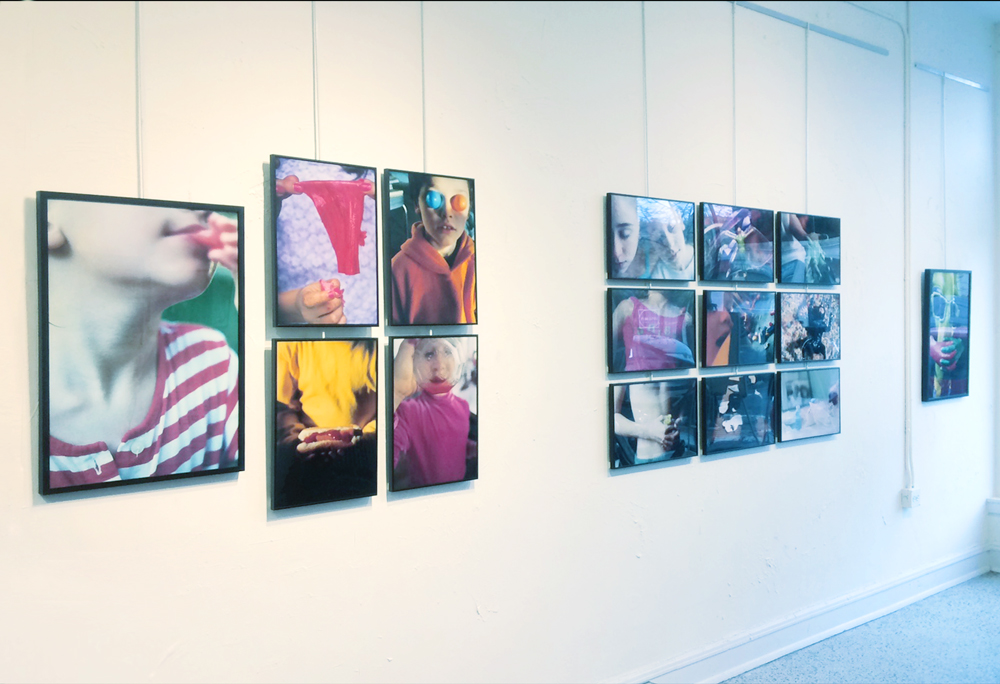
The sticky, colorful, in-your-face relentlessness; the shopping, meals, and laundry; the ever-present detritus on the counters and floor: this is daily life when raising children. We turned our cameras to this overlooked realm and embraced the chaos that humbles and exasperates, but ultimately enriches us.  

When we were in the thick of child-rearing and holding down jobs, it was difficult to maintain our previous collaborative photographic working methods. We put aside the large format camera and tripod, loaded 35mm cameras with Kodak Gold 200 film and positioned them in easy reach. We abandoned the road trips and journeyed into our children's world. Hours in the darkroom were replaced with quick trips to Walgreen's to drop off film, returning in an hour for a stack of 4 x 6 prints to critique. The amped up color palette of  “snapshot” film and the impressionistic grain of a shallow depth of field disassembled reality and yielded surprises. We stopped telling the children to clean up and delighted instead in the unfolding landscapes of their play, rich with transformation and wonder. By surrendering to the process, the mundane became the marvelous.
                           
Ciurej and Lochman have been collaborating on photographic narratives since they met as students at the Institute of Design in Chicago. For nearly four decades they have chronicled the physical and psychological landscapes in which they travel.

Thanks to Bob Tanner and Perspectives Gallery for inviting us to revisit this work from 2002, and to our children who played so diligently. Special thanks to those who know that bringing children into light is critical to evolved thinking about women and work.


11/1/16

Exhibition - I Witness: Activist Art and Social Movement Politics

Exhibition - I Witness: Activist Art and Social Movement PoliticS

Curated by Krista Wojrtendyke and Margaret Le Jeune
Heuser Art Center and Hartmann Center Gallery, 
Bradley University,  Peoria, Illinois
August 8 – September 23.

Selections from Watch Me Grow included in this exhibition of artists whose work addresses issues of social justice and political engagement to create a platform for discussion through the visual arts.

6/6/16

Variant - Greymatter Gallery Exhibition

Variant
April 15 through June 3, 2016
207 E. Buffalo St.   Suite 222,   Milwaukee,
Artist Reception Gallery Night April 15, 5-9pm 

featuring photographs Barbara Ciurej & Lindsay Lochman 
with response by Nicole Naudi
curated by Paul Drueke and Sarah Sutterfield


Installation - Watch Me Grow, 2009 - ongoing


Art City Review
The modest but resoundingly insightful show called "Variant" manages to address some of the most existential quandaries facing the art world today, all inside the 140-square-foot Greymatter gallery.
The Western world has long reckoned with a social question, which is: What is society's responsibility to those who fall through the cracks?
Similarly, since being emancipated from traditional practices and media over the past half century, the art world faces its own social question, which is: If art is not simply a formal or aesthetic enterprise (meaning: art isn't simply pretty paintings and sculpture in the round) what is its obligation to use its seemingly limitless agency to address social problems?
At first glance, "Variant" appears routine enough: a grid of nine photographs of storefront architecture by Barbara Ciurej and Lindsey Lochman, and three shelves displaying sketches and text by Nicole Naudi.
The modest but resoundingly insightful show called "Variant" manages to address some of the most existential quandaries facing the art world today, all inside the 140-square-foot Greymatter gallery.
The Western world has long reckoned with a social question, which is: What is society's responsibility to those who fall through the cracks?
Similarly, since being emancipated from traditional practices and media over the past half century, the art world faces its own social question, which is: If art is not simply a formal or aesthetic enterprise (meaning: art isn't simply pretty paintings and sculpture in the round) what is its obligation to use its seemingly limitless agency to address social problems?
At first glance, "Variant" appears routine enough: a grid of nine photographs of storefront architecture by Barbara Ciurej and Lindsey Lochman, and three shelves displaying sketches and text by Nicole Naudi.
Ciurej's and Lochman's photographs turn out to be of daycare centers in economically distressed areas of Milwaukee, so they're packed with social significance. But the social material is girded with exceeding formal rigor. Beyond the precise, gridded arrangement on the wall, the photographs themselves have the internal composure of a Piet Mondrian, with door jambs, window casings, and vertical blinds reacting to an implied grid that seems imposed by art history as much as carpentry. In many cases vertical blinds in the windows of the establishments frustratingly obstruct our view inside. And yet the visceral humanity of the content throbs from beneath and behind the formal elements.
Quirky handmade lettering on one storefront reads "Watch Me Grow" between two crudely painted but welcoming trees that disrupt the otherwise perfect bilateral symmetry of the spare storefront. Another photo is cropped to reveal only part of the center's handmade signage. The lettering "…BABY" and "…G ACADEMY" hangs conspicuously against a frieze of vertical strips as regular and perfect as caring for children is irregular and imperfect.
The photographs send beautifully conflicting signals. One naturally wants into these spaces, physically, emotionally and psychically, but our urges are continually impeded by visual elements. The form becomes metaphor.
Naudi's interpretations of Ciurej's and Lochman's photographs are scattered atop three shelved stations in the gallery. Each features loose pages of graph paper containing verse and prose passages, some hand written, some printed, with the strikethroughs and erasures indicative of a fitful editing session. They give off the manic energy of someone writing to catch up to a truth that will forever outrun their thoughts.
Naudi writes, "See them cradled in rectangular mangers/ these static tools of bisection/ units snapped from units/ autonomies sanctioned from and by you/ see your hand build the apparatus/ dividing into oblivion…"
Another passage reads,"…all is shared and all is deceit if not sensed lying down at the feet of our fixed fractals," followed by the word "gestalt" repeated four times.
Randomly placed doodles of hands, lists and diagrams mingle with her cryptic copy. And the more you look, the more a picture begins to emerge. A picture of structure as both urban module and compositional device — a picture where the grid and communities of flesh aren't mutually exclusive.
Gestalt indeed.
Naudi continues, "The shy temporal lobe collecting data like diamonds/ is compressed by neighborhoods/ gated as we peer/ between God's venetian shackles"
"Variant" provides a bird's eye view of the social question, offering not simply a perspective but a metaphorical bridge between multiple perspectives. Naudi's scribblings and text go a step further. They paint a picture not only of social structures, but of complexity and emergence, where structure erupts from simplicity and repetition.
And still no consensus has been reached on how to resolve individual interests and social well being in a free society. So what is the future to hold for an art world more and more equipped and more and more inclined to take on the social question?
So, what will happen to our own motley feudal ties to the aesthetic past? Will traditional art making merge smoothly into a new age of connectivity, interactivity activism and what's called social practice? Will aesthetics and social practice annihilate each other? Perhaps beauty and activism will simply live side-by side as unlikely admixtures.
"Variant" is curated by Milwaukee artists Paul Druecke and Sarah Sutterfield and is on view at Greymatter, 207 E. Buffalo St., Suite 222. It closes after Friday.
Shane McAdams is an artist and Art City contributor.
ART CITY An online journal about visual art, the urban landscape and design. Mary Louise Schumacher, the Journal Sentinel's art and architecture critic, leads the discussion and a community of writers contribute to the dialogue.


5/5/16

Featured - Doorways

Milwaukee has an abundance of lovingly decorated daycare centers. The sign on the door announces "Blessed Coming In" and here is one of the host of angels from the facade.

3/15/16

Matthew Desmond's "Eviction" Focuses on Milwaukee Eviction, Children are Caught in the Chaos

Children in Heavenly Hands
Author and Harvard sociologist Matthew Desmond casts a spotlight on the disastrous effects of eviction in his new book appropriately entitled "Eviction." The book focuses on Milwaukee families faced with eviction and the domino effect it has on their lives. In doing research for "Eviction," Desmond moved into first a trailer park and later a rooming house on Milwaukee's North Side, a neighborhood where poverty is the norm. Here, Desmond chronicled the lives of families who pay 70 to 80 percent of their income on rent for dwellings for often decrepit and dangerous. A review of "Eviction" in the New York Times illustrates how Desmond highlights how children are used in instances of eviction and the ways in which it affects their quality of life:

"One of the worst choices anyone can make is to have children, or even glancing human attachments of any kind. Landlords hate kids for being noisy, for trying to flush toys down the toilet, or — at their most devilish — testing positive for lead poisoning, which can bring down the authorities. Children and other family members are also risk factors for eviction, and not just because they are more mouths to feed. If an address generates, say, three 911 calls a month, the landlord will be issued a 'nuisance citation,' and the family will probably be evicted. Too bad if the 911 calls were occasioned by domestic violence or, in one case Desmond recounts, a child’s asthma attack. As one landlord’s son put it, 'We can’t have police coming up in here.'"

"Children are scarred in the process. They are pulled from one school to another; they periodically lose whatever tiny cache of possessions they may have accumulated. Grown-ups have trouble keeping their jobs, and the lack of an address may compromise their ability to gain, or hold on to, whatever benefits they are eligible for. Of all the evictees depicted in this book, only one — Scott, the former nurse — eventually regains a job and an apartment. When she loses her apartment, Crystal, an ebullient — or perhaps just manic-depressive — young evangelical Christian, turns to prostitution. Arlene, the mother of two, is last seen making her 89th call to find a new home. Like incarceration, eviction can brand a person for life, making her an undesirable tenant and condemning her to ever more filthy, decrepit housing."

Matthew Desmond is the creator of the Milwaukee Area Renters Study, which "examined court records, and conducted extensive ethnographic fieldwork to construct a vivid picture of the remarkably high rates of eviction and the ways in which it disrupts the lives of low-income African Americans, in particular." Desmond is the recipient of a fellowship with the MacArthur Foundation.

2/4/16

When Child Care Costs More Than Rent, Women Stay at Home

The isolation of Living in Destiny
The number of women who leave the workplace to care for their children is on the rise, as the cost of child care grows exponentially. As this article on the Slate blog cites, the average cost of child care for two children costs more than rent in 81 percent of towns in the U.S. The Department of Health and Human services notes that child care costs should not exceed 10 percent of a family's income. However, in many areas, this cost vastly exceeds 10 percent; in Birmingham, New York, child care costs three times as much as rent, and in San Francisco, California, child care costs about half as much as rent -- a figure which, as Slate notes, takes on new meaning when it is considered that renting a bunk bed can cost upwards of 1,000 dollars. It is these exorbitant costs for what even President Obama has called a "must-have" service that is motivating many women to leave the workplace. As Slate points out, "...For a myriad of complex and intersecting reasons—cultural norms, the persistent wage gap that keeps men in business leadership positions, the likelihood of the baby’s initial primary caretaker to continue in that role—women are usually the ones who quit." In short, as women generally bring home less money than their male counterparts, coupled with social norms, they are often the ones who stay home with the children in order to avoid paying for often cripplingly expensive child care. Indeed; "Expensive child care doesn’t just keep women out of the workforce and hamper their autonomy—it sets off a ripple effect that sustains a system of income inequality, making both child-rearing and working outside the home privileges of the rich."

1/14/16

EPI Report: Poor Wages for Child Care Workers

The Economic Policy Institute (EPI) released a report on the low wages paid to child care workers within the United States
Over the past several decades, child care has become increasingly important to families throughout the country, as the rising cost of many necessities has required guardians of children to spend more time at work. Despite the critical role child care now plays for many, child care workers remain, as the EPI states, "among the country’s lowest-paid workers, and seldom receive job-based benefits such as health insurance and pensions." Within the document, the EPI notes that the median hourly wage of child care workers is $10.31, a staggering 39.3 percent below the $17.00 median hourly wage of those in other occupations. Additionally, only 15 percent of those who work in child care receive health insurance from their employer, compared to the 49.9 percent of workers in other occupations who do.
These disadvantages mean that child care workers ultimately struggle more than those in other jobs to make ends meet; the EPI states that, "In the majority of metropolitan and nonmetropolitan areas across the country, more than 90 percent of child care workers (excluding preschool workers) cannot meet their local one-person budget." This also means that, ironically, many child care workers cannot afford child care for their own children. As the EPI report illustrates, "In 32 states and the District of Columbia, center-based infant care costs are equal to more than one-third of typical preschool worker earnings. In other words, a preschool worker’s entire pay in those states from January through at least April would be consumed by infant care costs."

These hardships are suffered predominantly by young women; 95.6 percent of child care workers are women, 15.4 percent of which are between the ages of 18 and 22, while 55.7 percent fall between the ages of 23 and 49. The majority of child care workers are born within the United States (81.2 percent), but are slightly more likely to be foreign-born when compared to workers within other sectors.

This EPI report illuminates the undeniably low wages made by child care workers and notes that, "It is abundantly clear that the unaffordability of child care is not driven by excessively lavish pay in the sector." Furthermore, it is impossible to improve the quality of child care by decreasing its cost and thus paying its workers smaller and smaller sums; increasing the number of children each worker is responsible for would increase productivity, but decrease quality of care. It is of little benefit to anyone to pile more and more work for lesser pay upon child care workers.

1/11/16

Publication - Lenscratch States Project - Kevin Miyazaki

Publication/Post - Lenscratch States Project


Watch Me Grow
January 10,  2016  - Kevin Miyazaki of Collect.Give invited us to be part of the Lenscratch States Project highlighting photographers from Wisconsin. Kevin visited the studio and took a portrait of us in front of the ancestor wall.

Watch Me Grow was featured.

12/20/15

Freya Jobbins & Hello Barbie: The Unnatural Nature of Dolls


We are what we eat- are we also what we play with? Australian artist Freya Jobbins asks questions about modern consumerism with her strange portraits made of doll parts. She states that “the irony of my plastic works is that I take a material that was created to be touched, and I make it untouchable as an artwork.”
Freya Jobbins with her dollies/raw materials


Jobbins' disturbing busts generate a lot of thought about what our expectations about children, forms of play, the nature of visual and tactile nurture, and children's imagination.


Some of these questions are discussed in a recent Wall Street Journal article about the newest generation of interactive, talking dolls.  


The description of six year old Riley's interaction with Hello Barbie  (a.k.a., chatterbot, talkbotchatbotBotchatterboxArtificial Conversational Entity) provides no evidence of learning, imagination nor enlightenment.  In addition, most of these dolls are marketed to girls...apparently an appropriate subject for experimentation. Wi-Fi enabled, Hello Barbie and her owner's privacy is, of course, compromised.


Here's Hello Barbie's New York City iridescent magenta launch! 

Hello Barbie Review, by Sarah
HELLO Barbie Doll has been released! She retails for just under $75 and is for ages 6 and up. You will need access to an Android or Apple device in order to download the app to get her to work. She also needs to be hooked up to your home wi-fi network to function. 
After viewing this Hello Barbie review,  Jobbins' freakish busts look incredibly charming.....


11/24/15

Researching the Sublime

The Tate Gallery explores the power of the sublime in this fabulous site.
"The sublime has long been understood to mean a quality of greatness or grandeur that inspires awe and wonder. From the seventeenth century onwards the concept and the emotions it inspires have been a source of inspiration for artists and writers, particularly in relation to the natural landscape."
Tate Sublime Overview

To make our constructed scenes, we studied representations of humanity pitted against monumental forces throughout art history. The landscapes of 19th century Romantic painters like John Martin, Caspar David Freidrich and J.M.W. Turner exemplify this. These artists employed various devices for heightened dramatic effect: light and darkness, turbulent seas, ferocious storms, dizzying chasms, raging rivers, insurmountable mountains, minute struggling humans. The presentation of human travail against great odds was intended to make viewers feel vulnerable, and to elevate them to recognize the struggle we share.

With ramped up color and action, current apocalyptic films and video games are the descendants of the romantic tradition. Both traditions are meant to induce terror via spectacle. Both try to move us to new considerations. Perhaps by contemplating worst case child care scenarios, we could stimulate ideas about an equitable and compassionate alternative.

Watch Me Grow: America's Unequal Childhoods

While documenting child care centers, we collected lists of the inventive names given to them. We chose titles for the images from the list  that worked in a paradoxical way with the allegorical landscapes.  The names suggested a cradled, protected childhood and proclaimed hope for the future. When paired with the scenes we created, they can be read as broken promises. Our title for the series, Watch Me Grow, can describe witnessing the growth of failure and despair, or suggest children thriving. 

 
A list of some of the Milwaukee childcare centers from a Google search
A Passion of Kids Childcare
A Little Attention Day Care
A Mother’s Love
A Promise of Hope Academy
A Step into Heaven Learning
A Step Up Childcare
Angelic Care Childcare LLC
About our Kidz Development/Learning
Academically Bound Child Care
Academics R Us
All About Me Child Care
Alice & Wonderful Land Learning Center
All God’s Children
All Night Child Care I & II
All Our Kids Childcare
All Walks of Life Child Care
Amazing Grace Childcare
Angel Care Day Care
Angelic Care Day Care
Angels Tiny Tots Child Care
Angels Watching Over You Child Care
Anointed Child Care Services
Apple Tree Artistic Learning Center
Atonement Early Childhood Center
Babes in Joyland
Babyland
Bee-lievers Day Care
Beautiful Beginnings
Before and After Child Care
Beginning to Blossom
Benevolent Child Care
Big Babies Play House
Big Bird Little Bird Daycare
Blue Moon Child Care
Bright Beginnings Children’s Center
Bright Horizons
Bumble Bee Learning Center
Chanel & Moe-Moe’s Daycare
Charlotte’s Web Crawlers
Cherish The Kids Day Care
Children of America
Children Are the Future Child Care
Children in Heavenly Hands Childcare
Children of the Future
Children of The Kingdom Academy
Children’s Edu-Care
Children Fantasy Childcare & Learning Center
Children’s Imagination Station II
Children’s Pantry Family Resource Center
Children’s Place of Joy
Child’s Land
Circle of Life Child Care
Come Learn with Me
Coral Bells Learning Center
Cradles Cribs & Crayons
Daddie’s Day Care
Danita’s Loving Hands Two
Dee’s Loving Childcare
Destiny’s Playland
Destiny’s Child Christian Academy
Dollie Little Darlings
Dreamland Childcare
Esperanza Del Futuro Child Care
Excellent Academy
Extra Loving Day Care
Eyes on God Day Care
Falling into Loving Arms
First Class Child Care
Follow the Yellow Brick Road
Follow Your Dream Child Care Center
Follow the Nurturing Nook
Future Family Day Care
Future of Tomorrow Child Development Center
Genesis I Child Daycare
Gingerbread Daycare
God’s Chosen Child Care & Development Center
God Creation Child Care
God’s Care Child Center
God’s Kidz R Us
Golden Rule Day Care Learning Center
Goldilocks Smart Start
Graham Cracker Childcare Center
Grandma Betty’s Babies
Grandma’s House Day Care Centers
Greater New Birth Child Development
Growing Treasures
Guardian Angel Learning Center
Guarding Your Angels
Happy Days Day Care Center 2
Hart and Starr Teaching and Learning Center
He Cares Christian Day Care
Heaven’s Angels Day Care
Heaven Sent Daycare
Heavenly Arms CC& LC
Home Away From Home
Honey Bears Learning Tree
House of Destiny Little Saints Child Care
I Care Kids Care
In Caring Hands
I HeartKids Childcare
Inspired Kingdom Evangelistic Ministries
Itty Bitty Kiddy City
Jesus Loves Daycare
Jesus Loves Daycare Two
Joyful Love Childcare Center
Joyful Noise Child Care
Jubilee of Colors Too
Just Like Home Family Day Care
Kids Kollege Child Development
Kiddie Academy of Learning
Kid Tech Incorporated
Knowledge Nest Child Care Center
Kids Are Smart
Kids Palace Learning Center
Kidz N Playhouse CC Academy
Kingdom Care Child Care Center
Kids Rule Academy
Kids R Just Kids
Kids R Kreative
Kid’s World
Knowledge IS Power Christian Child Care
Kuddle Care Academy
Kiddie Academy of Learning
Learn Through Love
Lil Dinks & Bubbles
Lil Einstein’s Academy of Excellence
Lil Kings & Queens Child Care 2
Lit’l Scholars Day Care
Little Angel Academy Child Development Center
Little Fish in the Sea Day Care
Little Leaders Learning Center
Little Peoples Academy
Little Peewee Day Care Center
Love at First Sight Learning Academy
Love Laugh & Learn
Love Nest Little Angels I & II
Loveable Miracles
Loving Arms Child Care
Loving a Generation Day Care
Magic Me
Miss Daisy’s Daycare Center
More Precious Thanks Gold Child Care
Most Precious Journee
Most Precious Possessions I & II
Mother Jones Childcare Academy
Mothers Helper Day Care
New Beginnings ChildCare Center Stage 2
New Creation Christian Daycare
New Direction Child Care Center
New Millennium Child Care
Next Generation Child Development
Nursery Scholars
Nurturing Nook Inc.
One Small Step Academy
One Two Three Four Childcare
One Step Ahead Developments
Only God Can Children’s Academy
Open Arms Child Care
Open Hands
Our Child Our Future Learning Center
Our Children First
Our Growing World
Over the Rainbow Family Day Care
Over the Top Learning Academy
Perfecting Kids Academy
Precious Babes Christian Day Care
Precious Moments Childcare Center
Precious Little Angels
Precious Minds & Memories Childcare
Prince of Peace Day Care Center
Princess Family Daycare
Pristine Child Care
Pumkin’s Playland
Quality Life Services Daycare
Ray’s Lil’s Lamb Family Day Care
Rising Star Learning Academy
Rock a Bye Baby Child Care
Roses of Today’s Children
Royal Palace Child Care Center
Safe Haven
Sallie’s Love Land Phase II
ShaNANNYgans Childcare Center of Milwaukee
Shatia’s Love Center
Shining Star Development Center
Shmeka Soul Daycare
Shower of Blessings
Small Wonders
Small Talk University
Smart Kidz
Spirit Life Creative Christian Childcare
Strawberry’s Shortcake Child Development Center
Sugar & Spice Child Care Center
Sun Shine Palace Childcare
Sunrise to Sunset Child Care Center I & II
Superstar Child Care
Tangle’s Just Like Mommy
Teddy Bear Child Care
Teenie Tiny Tots Childcare Center
TenderCare Child Care Center
Through The Eyes of A Child
Tigger Playpen
Tiny Little Creations
Tiny Green Trees
Tippi Toes Child Care Center
Toddle Town
Tomorrow’s Future Early Childhood
Tomorrow’s Leaders Learning Center
Touch of Love Child Care & Learning Center
Toy’s Lil Looney Child Care
Tweety Bird Day Care
Tweety & Tots
Unique 8 Childcare Center
Utopia Child Care Centers
VIP Child Care Services
Victorious Child Care
Watch Me Grow
Wee People Dreamworld Daycare
Wee Willie’s Wonderland
What About the Children
Young Achiever Learning Center
Young Minds Preschool
Your Child My Child


7/19/15

Economic Hardship Reporting Project

Guided by award-winning journalists Barbara Ehrenreich and Alissa Quart, the Economic Hardship Reporting Project is changing the national conversation around both poverty and economic insecurity. Their stories – from narrative features to photo essays and video – put a human face on financial instability.
Launched in 2012, EHRP arose in a bleak climate. Over the past decade, poverty in the U.S. has soared. Despite economic growth, inequality continues to rise. It’s the biggest domestic economic story of our lifetimes: intractable, long-term unemployment, a yawning income gap between the wealthy and the lower middle class, and record numbers of people in poverty.

We look forward to working with EHRP on a project addressing the landscape of daycare.
See another photographic project by Matt Black, The Geography of Poverty.

Photographs with Paint: Sebastian Bremer

Utilizing the artist’s signature style of obsessively applied dots of paint to a photographic surface, and adding etching to his working method, Bremer renders the subjects of this series in a dream-like haze of abstraction. Drawing from Surrealism, Modernism, and Cubism, the artist collages photographs and paintings together to create a seductive labyrinth of entangled bodies and art.
From the series, Ouroboros (2013)
From the series, Schoener Goetterfunken (2010)


Apocalyptic Sublime Landscapes - John Martin


The Last Judgement 1851-3


The Plains of Heaven 1851-3
John Martin's (1789-1854) great triptych, known as the Judgement Series was inspired by St John the Divine's fantastic account of the Last Judgement given in Revelation, the last book of the New Testament. Martin's aim in producing this series was highly Romantic: to express the sublime, apocalyptic force of nature and the helplessness of man to combat God's will. Of all Martin's biblical scenes, this presents his most cataclysmic vision of destruction, featuring an entire city being torn up and thrown into the abyss. 
The Great Day of His Wrath, 1851-3

The Book of Judgement is sealed with seven seals. As each seal is broken, mysterious and terrifying events occur, culminating in the breaking of the sixth seal:
and, lo, there was a great earthquake' and the sun became black as sackcloth of hair, and the moon became as blood; | And the stars of heaven fell unto the earth, even as a fig tree casteth her untimely figs, when she is shaken of a mighty wind. | And the heaven departed as a scroll when it is rolled together; and every mountain and island were moved out of their places. (Revelation 6:12-14)

Martin follows the biblical description closely, but adds his own sensational effects. A blood-red glow casts an eerie light over the scene. The mountains are transformed into rolling waves of solid rock, crushing any buildings that lie in their wake. Lightning splits the giant boulders which crash towards the dark abyss, and groups of helpless figures tumble inexorably towards oblivion.

The three pictures in the triptych became famous in the years after Martin's death and were toured throughout England and America. They were described as 'The most sublime and extraordinary pictures in the world valued at 8000 guineas' (quoted in Wilson, p.76). Many mezzotints of the pictures were sold, but the vastness and theatricality of Martin's visions now appeared outmoded to the mid-Victorians, and the paintings themselves failed to find a buyer. By the twentieth century, Martin's work had fallen into obscurity and he became known as 'Mad Martin'. In 1935 the triptych was sold for seven pounds and the separate panels dispersed. It was reunited by the Tate in 1974.